

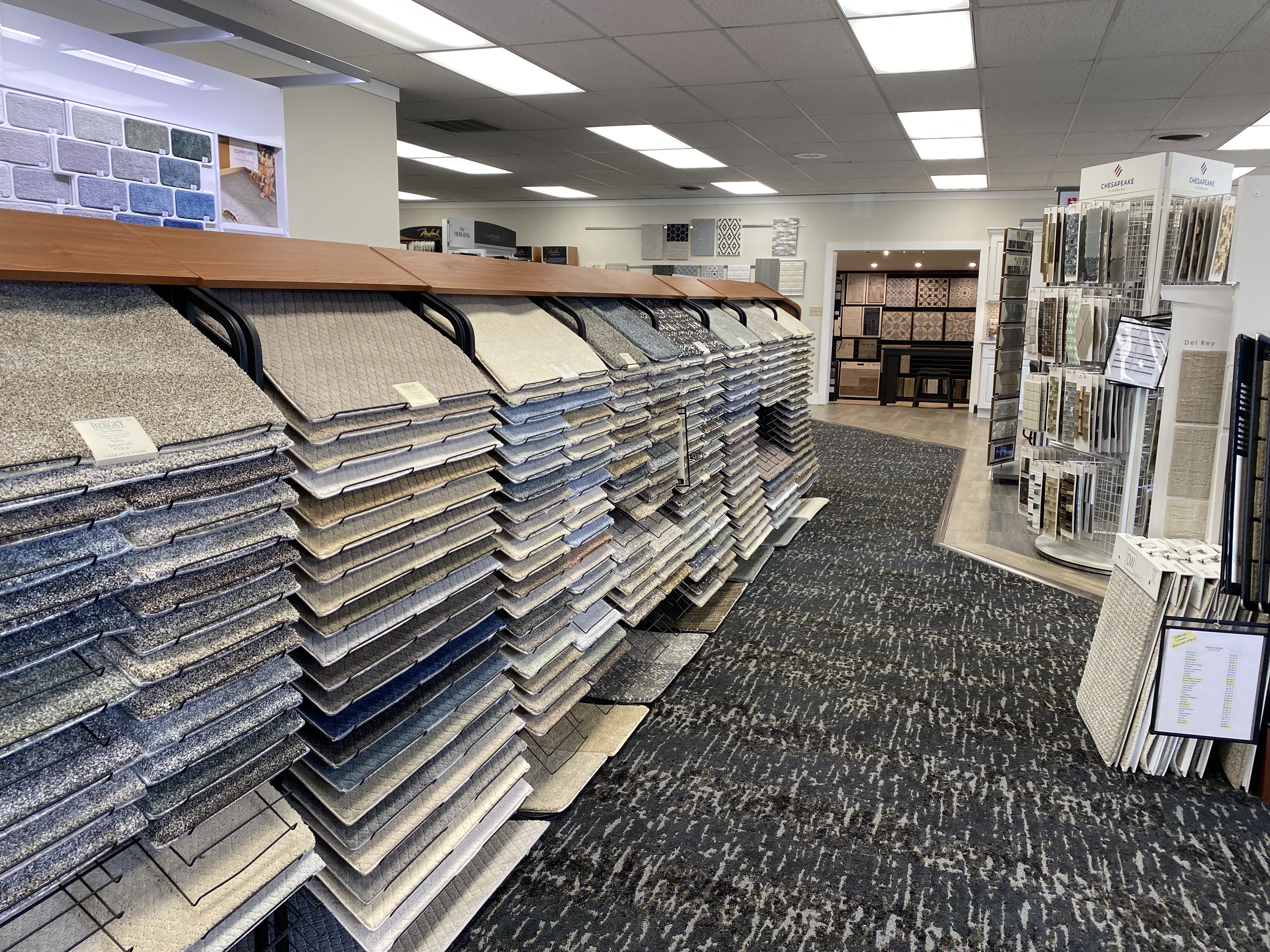
Layering textures is one of the easiest ways to make an interior feel finished. Wood furniture against upholstery, woven accessories beside smooth surfaces, and textiles layered throughout a room can create depth that a single material cannot achieve on its own. Flooring is part of that equation, and carpet can provide one of the most substantial textural foundations available to homeowners.
But adding softness requires balance. When carpet, rugs, furniture, curtains, and upholstery all compete for attention, a room can quickly feel crowded. The trick is understanding how to use carpet as the foundation and area rugs as accents rather than treating every surface as an opportunity to add another pattern.
Start With the Foundation
Wall-to-wall carpet already creates a strong visual and textural foundation. Because it covers such a large percentage of the room, its color and texture should generally be considered first.
A neutral carpet can provide the flexibility to introduce stronger colors through rugs, furniture, artwork, or bedding. A more textured carpet can also add interest without requiring a dramatic pattern.
The goal is to establish one dominant flooring layer before introducing additional elements.
When Should You Add an Area Rug Over Carpet?
An area rug can be useful over carpet when the goal is to define a particular zone or introduce a specific color or pattern. In a large bedroom, for example, a rug beneath a seating area can distinguish that space from the sleeping area.
In a large family room, a rug can visually gather furniture together and create a more intimate conversation area.
The rug should have a purpose. If it is simply added because the room feels empty, it may create more visual activity without actually improving the layout.
Contrast Can Be Subtle
Layering does not require dramatic contrast. A textured neutral rug over a slightly different neutral carpet can create depth without introducing another strong color.
This approach can work particularly well in sophisticated interiors where homeowners want the room to feel layered but restrained. Different textures become the source of visual interest rather than multiple competing colors.
Use Pattern Carefully
If the carpet is relatively plain, an area rug can become the statement layer. Geometric patterns, traditional motifs, organic designs, and contemporary abstracts can all change the character of a room.
However, the rug should be considered alongside upholstery, curtains, artwork, and other textiles. If the room already contains several patterns, a quieter rug may create better balance.
Size Matters More Than Many Homeowners Expect
A rug that is too small can make a seating area feel fragmented. Ideally, the rug should have enough presence to visually connect the furniture it is intended to define.
In a bedroom, this might mean selecting a size that extends beyond the bed and creates a soft landing area around it. In a living room, the rug can help anchor the main seating arrangement.
Scale is therefore just as important as color and pattern.
Carpet Can Be the Quiet Part of the Design
One of the benefits of carpet is that it can provide comfort and texture without becoming the main visual attraction. A restrained carpet can allow artwork, furniture, lighting, and decorative elements to take center stage.
This is especially useful in bedrooms and family rooms where the desired atmosphere is relaxed rather than formal.
Layering Works Best When Every Element Has a Job
The most successful layered interiors are not necessarily the ones with the most materials. They are the ones where each material serves a purpose. Carpet provides the foundation. A rug defines a zone. Furniture establishes function. Curtains control softness and light. Artwork adds personality.
When every element contributes something different, the room feels considered rather than cluttered.
Choosing Carpet for a Layered Interior
If you know that you want to use area rugs, consider that when selecting the carpet itself. A highly patterned carpet may make it harder to introduce another strong visual layer. A neutral or subtly textured carpet provides more freedom.
That does not mean the carpet has to be boring. Texture, subtle variation, and carefully selected color can provide plenty of character without competing with the rug.
A Softer Room Does Not Have to Feel Heavy
Carpet and rugs can create a warm, inviting atmosphere while still feeling modern. The difference comes down to editing. Choose a foundation that supports the room, introduce rugs where they genuinely improve the layout, and allow enough visual space for the furniture and architecture to breathe.
For homeowners in Southlake considering carpet for bedrooms, family rooms, offices, or other living spaces, thinking about the complete flooring composition can lead to a more sophisticated result than choosing carpet in isolation.
Explore the carpet flooring options from Floors Elite DFW to compare colors and textures that can serve as the foundation for your interior. For help planning your flooring and determining how carpet can work with rugs and the rest of your home's design, contact Floors Elite DFW to discuss your Southlake project.


