

What Southlake Homeowners Should Know Before Installing Hardwood Over Concrete
Hardwood flooring can bring natural warmth, visual depth, and a sense of permanence to a home. Its grain, color variation, and authentic wood surface work with a wide range of interiors, from contemporary open-plan spaces to more traditional rooms. But before choosing a hardwood floor, homeowners need to consider something less visible than the finish: the surface underneath it.
In many homes, the subfloor is a concrete slab rather than a traditional wood-framed floor. This changes how hardwood must be selected and installed. A product that performs well over a plywood subfloor may not be suitable for direct installation over concrete, and moisture conditions can affect the long-term performance of the finished floor.
For homeowners in Southlake and the surrounding Dallas–Fort Worth area, understanding these requirements before purchasing flooring can help prevent avoidable problems. The right approach begins with the existing slab, the room's conditions, the construction of the hardwood product, and the installation method approved by the manufacturer.
Why the Subfloor Matters as Much as the Wood
A hardwood floor is only as reliable as the surface and conditions supporting it. Concrete can look clean and dry while still containing or transmitting moisture. If moisture levels exceed the flooring manufacturer's limits, the installation may experience problems such as cupping, swelling, gaps, adhesive failure, or other forms of movement.
These issues do not necessarily appear immediately. A floor may initially look excellent, only to develop changes after indoor conditions shift or moisture begins affecting the flooring system. This is why a visual inspection alone is not enough to determine whether a slab is ready for hardwood.
Before installation, the concrete should be assessed for moisture and surface condition. The installer must also determine whether the slab is sufficiently flat, clean, and structurally suitable for the chosen product. Cracks, uneven areas, old adhesive, coatings, and contamination may require attention before the floor can be installed.
Correct preparation is not simply an extra step in the process. It is part of choosing a flooring system that is appropriate for the home. A beautiful plank cannot compensate for a subfloor that has not been properly evaluated.
Can Solid Hardwood Be Installed Over Concrete?
Solid hardwood is manufactured from a single piece of wood. Because wood naturally responds to changes in moisture, solid planks can expand and contract as indoor conditions change. For this reason, solid hardwood generally cannot be nailed directly to a concrete slab using the same method used over a suitable wood subfloor.
Some installation systems may allow solid hardwood to be installed over concrete when an approved wood subfloor or other specified assembly is constructed above the slab. However, adding that structure changes the project requirements, floor height, and preparation work. It should not be improvised without confirming the product manufacturer's instructions and the suitability of the entire system.
If you have your heart set on solid hardwood, ask what would be required to install it correctly in your particular home. Consider the added height at doorways, transitions to adjoining rooms, stair connections, and any impact on cabinetry or appliances. These details can influence whether the proposed installation is practical.
It is better to understand these requirements before choosing a specific product than to select a floor first and discover later that the existing slab is unsuitable for the intended installation method.
Why Engineered Hardwood May Be Worth Considering
Engineered hardwood has a real wood surface layer attached to a constructed core. Its layered construction is designed to provide greater dimensional stability than a comparable solid wood plank under changing conditions. Depending on the product, engineered hardwood may be approved for glue-down or floating installation over suitable concrete slabs.
This can make engineered hardwood a practical option for some Southlake homes where concrete is the existing subfloor. It provides the visible character of real wood while offering installation choices that may not be available with solid hardwood in the same setting.
However, engineered hardwood is not a single uniform category. Products differ in core construction, surface-layer thickness, dimensions, finish, moisture requirements, and approved installation methods. Some products may allow a particular installation system while others require a different approach.
Check the manufacturer's instructions for the exact product you are considering. Ask whether the floor is approved for installation over concrete, which moisture tests are required, what adhesive or underlayment may be used, and whether the installation needs a specific moisture-control system.
The right choice is not simply solid versus engineered. It is the flooring product and installation method that work together with the actual conditions of your home.
Moisture Testing Should Happen Before Installation
Concrete can retain moisture from the original construction process or be affected by water vapor moving through the slab. A floor may appear dry on the surface even when its moisture condition is unsuitable for a particular flooring product or adhesive.
Moisture testing helps establish whether the slab meets the product's requirements. The appropriate testing method and acceptable results depend on the manufacturer's specifications and the installation system. Do not rely on a general rule from another flooring project, because different products and adhesives may have different limits.
If testing identifies excessive moisture, the source and severity should be evaluated before work proceeds. Depending on the conditions, the solution may involve correcting a moisture source, allowing additional drying where appropriate, or using an approved mitigation system. The correct response must be based on the actual test results and product requirements.
Simply placing a moisture barrier over an unresolved problem is not always sufficient. Some systems require particular surface preparation, primers, or moisture-control products. Others may not be compatible with certain adhesives or flooring constructions. The complete assembly must be approved for the conditions present.
Ask for clarity about the testing process before installation begins. Understanding what was tested, which requirements apply, and whether the slab passed can give you greater confidence in the project.
Check the Slab for Flatness and Surface Preparation
Moisture is not the only consideration. Concrete must also meet the flooring manufacturer's requirements for flatness and surface condition. An uneven slab can create problems with plank support, adhesive coverage, locking systems, and the appearance of the completed floor.
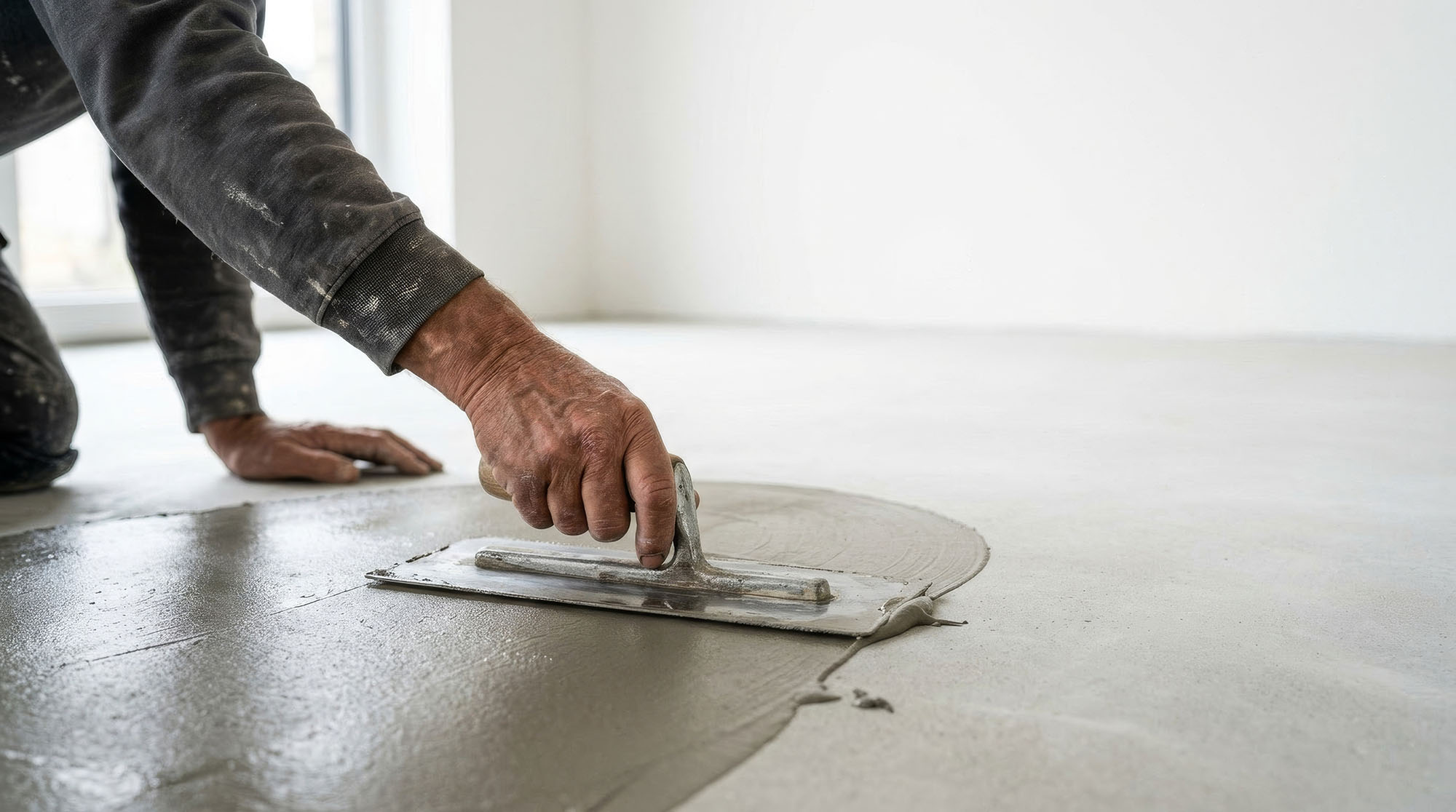
Low spots, high areas, cracks, and old flooring residue may need to be addressed before installation. The appropriate preparation depends on the severity of the issue and the product being installed. Some areas may require grinding, patching, or a compatible leveling compound.
Cleanliness matters, too. Dust, grease, coatings, old adhesive, or other contaminants may interfere with bonding when a glue-down system is used. A concrete surface should be prepared according to the adhesive and flooring manufacturer's instructions rather than treated as ready simply because the old flooring has been removed.
Preparation should be assessed before the final installation date is scheduled. If the slab requires additional work, it is better to identify that early than to rush the process to meet a renovation deadline.
Consider Indoor Humidity and Seasonal Changes
Wood is a natural material that responds to its surrounding environment. Changes in indoor temperature and relative humidity can influence the moisture content of the wood and contribute to movement. The amount of movement depends on the product's construction, the conditions in the home, and how the floor was installed.
Follow the manufacturer's guidance for indoor temperature and humidity before, during, and after installation. Heating and cooling systems should be operating under the conditions specified for the product, and the home should be ready for the flooring rather than still undergoing major construction work that may introduce excess moisture.
Pay attention to spaces where indoor conditions can differ from the rest of the house. Areas near exterior doors, rooms with substantial sunlight, and spaces affected by plumbing or moisture problems may need additional consideration.
Do not assume that engineered hardwood eliminates the need for environmental control. Its construction can improve dimensional stability, but it remains a wood-based product with specific installation and care requirements.
Plan Transitions, Doors, and Cabinetry in Advance
Installing hardwood over concrete can change the finished floor height, particularly if the project involves an additional subfloor or underlayment. Before work begins, examine how the new surface will meet adjoining rooms, existing tile, carpet, stairs, and exterior doors.
Door clearance is another practical consideration. A new floor may affect the movement of interior doors, closet doors, or appliances. Kitchen cabinets and fixed islands also need to be considered when choosing a floating or glue-down system. The manufacturer's instructions should determine which installation methods are suitable around fixed objects.
Transitions should be planned rather than left until the final day. The appropriate transition profile depends on the difference in height, the materials being joined, and the product's installation requirements. A carefully planned transition can make the finished floor look intentional and help avoid awkward edges.
For open-plan layouts, think about the direction of the planks and the visual connection between spaces. A consistent design can make the home feel cohesive, but the layout must also work with room dimensions, installation requirements, and the shape of the slab.
Questions to Ask Before Choosing a Hardwood Product
Before committing to a product, ask whether it is approved for installation over concrete, which installation methods are permitted, and what moisture testing is required. Find out whether a moisture-control system or specific adhesive is necessary and whether the warranty has conditions related to subfloor preparation or indoor climate.
Also discuss the surface appearance you want. Wood species, grain variation, plank width, finish, and color all influence the final look. Samples should be viewed alongside your cabinetry, trim, wall colors, and furniture whenever possible.
Ask what the estimate includes. Subfloor repairs, moisture testing, leveling, removal of existing flooring, transitions, and installation materials may affect the final project cost. Understanding the scope before work begins helps you compare options accurately and reduces the likelihood of unexpected preparation work.
Explore Hardwood Flooring for Your Southlake Home
Hardwood flooring over concrete can be a successful project when the product, slab, and installation system are compatible. The most important decisions happen before the first plank is laid: assess moisture, prepare the surface, select an approved product, and follow the manufacturer's installation requirements.
Explore the available styles on the Floors Elite DFW hardwood flooring page to compare wood finishes and product options for your home. Once you have a style in mind, visit the contact page to discuss your flooring project and the conditions that may affect installation.
Whether you are updating a single room or planning a larger renovation in Southlake, understanding the concrete beneath your floor is an essential part of making a well-informed hardwood decision. With suitable preparation and the right installation method, you can work toward a finished floor that brings natural wood character into your home while respecting the requirements of the building itself.


